

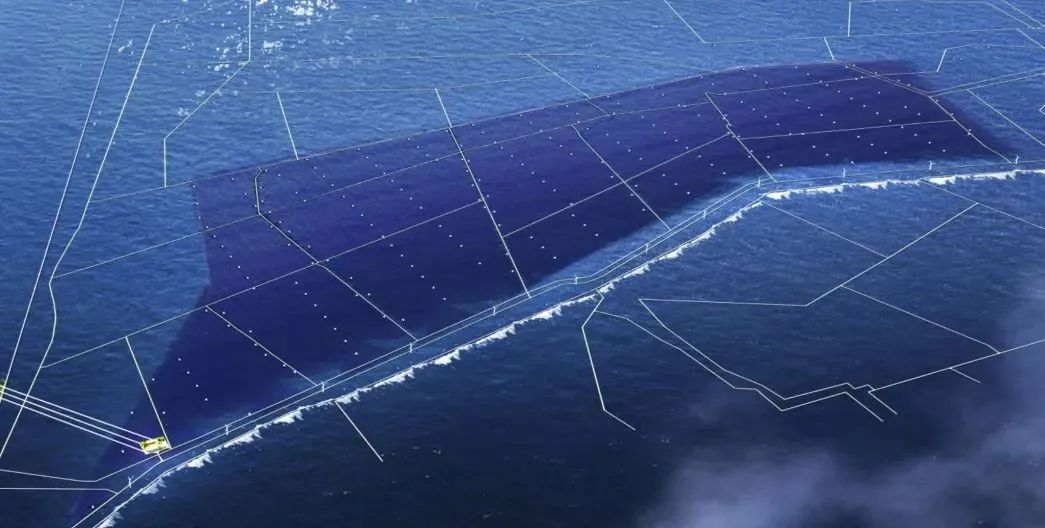
Binzhou 850 MW Offshore Solar: LY Steel’s Marine-Grade Steel Leads the Way
Hunan’s LY Steel (Lianyuan Steel) has secured bulk orders of high-corrosion-resistant weathering steel for the 850 MW Binzhou New Energy Offshore Photovoltaic Project in Shandong—the first offshore PV project approved under China’s new marine “three-dimensional (3D) property-rights” framework. The project’s first 600 MW was grid-connected on Dec 27, 2024, and the site has since achieved full-capacity grid connection. Once fully online, it will generate about 1.286 billion kWh of clean power annually while enabling multi-use of the sea surface for aquaculture and salt/brine extraction.
Offshore photovoltaics: where the market is headed
Solar at large is booming. By the end of 2024, global PV capacity reached roughly 2.25 TW, with China alone estimated to have passed 1 TW of cumulative installations—underscoring the scale and supply-chain momentum now spilling into offshore applications. IEA-PVPS
Floating/offshore PV is the next growth curve. Wood Mackenzie expects floating solar (FPV) to reach 77 GW of cumulative capacity by 2033, with APAC accounting for ~81% (57 GW). The firm projects ~1.7 GW of FPV additions in 2024, rising to a 13.5 GW annual peak in 2026; the US remains niche at ~0.7 GW by 2033. PV Tech
China is already commissioning record-scale projects. Beyond tidal-flat, pile-mounted PV, China is now delivering open-sea floating PV: in Nov 2024, state utility CHN Energy completed a 1 GW floating project ~8 km off Dongying (Shandong), spanning 1,223 ha with 2,934 offshore PV platforms, a 66 kV export cable, and an “fishery + PV” integrated operating model. PV Tech
Pilots are getting tougher. Demonstrators such as “Yellow Sea No. 1” have progressed to sea trials designed for 5–10 m wave heights, 12–30 m water depths, and ~30 m/s winds, pointing toward deeper-water, gigawatt-scale prospects and hybridization with offshore wind. sciepublish.com
What still needs solving? The latest IEA PVPS review highlights FPV-specific challenges—marine corrosion, biofouling, wave-induced mechanical stress, and O&M access—while noting active standardization work under IEC. It also points to a median FPV CAPEX of ~$1.18/W (2022) and calls out the need for better yield models and reliability data to further de-risk utility-scale deployments. IEA-PVPS
Two offshore PV archetypes—and where Binzhou fits
- Tidal-flat / pile-mounted (“nearshore”)
Built on shallow coastal flats (often saline-alkali), these assets elevate arrays over water on piles. They commonly co-develop with aquaculture (“fishery-PV complement”) to maximize marine space productivity and local incomes. Provinces such as Zhejiang explicitly encourage this multi-use approach. 英为财情 Investing.com - Floating (“open sea” / reservoirs)
Arrays float on modular platforms with moorings/anchoring systems; recent Chinese projects are increasingly offshore, not only on reservoirs. They promise land savings and potential cooling-related yield benefits but must be engineered for salt spray, waves, and storms—with reliability risks like corroded junction boxes, delamination, and wave-slamming damage documented in field observations. IEA-PVPS
Binzhou’s 850 MW sits primarily in the tidal-flat / pile-mounted camp and is distinctive for being China’s first offshore PV project approved under the “3D marine property-rights” regime, which legally underpins stacked uses of the same sea area—PV on the surface with simultaneous aquaculture and salt/brine operations beneath. That framework is a blueprint for scaling multi-use marine renewables along China’s coast. paper.people.com.cn
Benchmarking Binzhou against industry trajectories
- Scale & pace: At 850 MW, Binzhou is already at true utility scale—comparable to leading FPV assets globally and consistent with WoodMac’s outlook for multi-hundred-MW deployments dominating APAC growth. Its stepwise grid-in (first 600 MW in Dec 2024; full capacity in 2025) mirrors how coastal provinces are accelerating large projects to absorb supply-chain capacity. paper.people.com.cnsasac.gov.cnPV Tech
- Business model: “Fishery + PV” improves marine-area productivity and can support water-quality benefits and thermal moderation—important for aquaculture yields—according to emerging research on fishery-PV systems. Binzhou operationalizes this at scale under 3D rights, providing a policy-and-practice template for other coastal bases. New EnergyMDPI
- Technology & risk: While open-sea FPV pushes engineering limits (deep water, higher waves), tidal-flat/pile schemes like Binzhou still face C4-and-harsher marine corrosion, saline spray, and O&M hurdles. The IEA PVPS report underscores exactly these reliability vectors (corrosion, biofouling, wave-induced stress), reinforcing Binzhou’s stringent material specs for structural steel and balance-of-system hardware. IEA-PVPS
- Policy significance: Being the first project approved under China’s 3D marine property-rights policy gives Binzhou outsized signaling value: it demonstrates that spatial co-use—energy, aquaculture, and traditional salt/brine—can be permitted, financed, and delivered at grid scale. That complements China’s broader push for multi-scenario “PV+” models (e.g., agrivoltaics, fishery-PV) in its energy-transition roadmap. paper.people.com.cngov.cn
Why materials matter offshore—and what LY Steel delivers
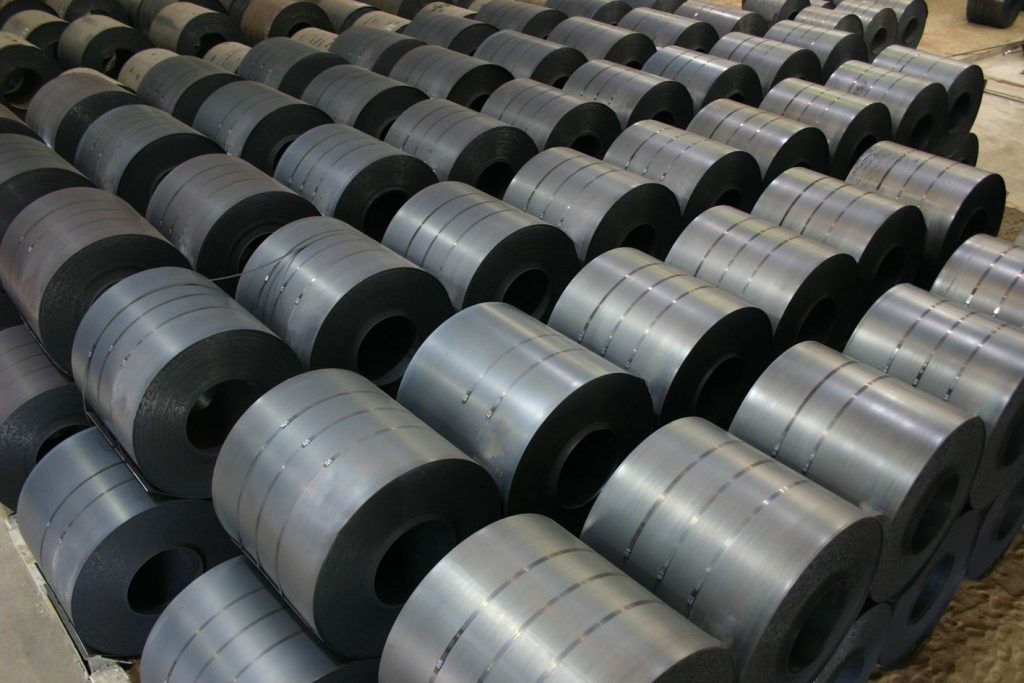
Binzhou’s coastal environment demands exceptional corrosion performance and no adverse impacts on water quality. LY Steel’s high-corrosion-resistant weathering steel was selected after on-site environmental assessments and engineering reviews, matching the project’s requirements for C4-and-harsher marine conditions and aquaculture-compatible operations. Robust metallurgy supports:
- Structural longevity in saline, humid, and spray-laden air—mitigating replacements and unplanned outages identified by IEA PVPS as core O&M risks for water-based arrays. IEA-PVPS
- Lifecycle economics, by curbing corrosion-driven failures (junction boxes, fasteners, frames) and reducing maintenance windows that are costlier offshore than on land. IEA-PVPS
Backed by integrated R&D and supply capabilities, LY Steel partnered closely with EPC and owner teams to tailor specifications to Binzhou’s saline-alkali tidal-flat environment and the project’s 3D co-use mandate. The resulting solution delivers environmental and social value—clean power, productive aquaculture, and optimized marine-space use—while elevating Hunan manufacturing as a national backbone supporting China’s offshore-renewables surge. paper.people.com.cn
The bottom line
- Market signal: Offshore PV is moving from pilot to platform—tens of gigawatts this decade—led by APAC.
- China’s lead: From open-sea FPV (1 GW, Dongying) to 3D-rights tidal-flats (850 MW, Binzhou), China is proving multiple viable offshore PV pathways at scale.
- Materials as an enabler: Long-life, marine-grade steels are pivotal to bankability in corrosive environments—exactly where LY Steel’s solution is engineered to excel, aligning with reliability priorities flagged by IEA PVPS.
LY Steel is proud to help power this “blue-ocean” opportunity—supporting Binzhou’s clean-energy output of ~1.286 billion kWh per year and advancing China’s green, multi-use marine economy.
Reach Out for Collaborations & Partnerships
Whether you’re developing tidal-flat PV, open-sea FPV, or hybrid fishery-plus-solar assets, GONMO (strategic distributor of LY Steel) welcomes partnerships that accelerate reliable, bankable offshore projects.
Who we work with
- Utility/IPP developers & EPCs
- Offshore wind owners exploring PV hybridization
- Aquaculture operators and coastal industrial parks
- Marine structure fabricators & BOS suppliers
- Research institutions, classification societies, and technology pilots
What we bring
- Marine-grade steel portfolio: High-corrosion-resistant weathering steels, HSLA/TMCP structural grades, galvanized/coated solutions, cut-to-length and kit fabrication for piles, frames, walkways, and BOS hardware.
- Quality & compliance: Mill test certificates, third-party approvals and global management systems (ISO 9001/14001/45001/50001, PED, marine/class certifications) to streamline permitting and bankability.
- Global logistics: Project shipping via FOB/CIF/DDP, staging, and on-time delivery across APAC, MENA, Europe, and the Americas—plus full export documentation.
- Sustainability credentials: Low-impact production practices and recycled-content options on selected coated products to support ESG targets.
Let’s build the offshore PV baseline together. Contact your GONMO representative or reach us via hello@gonmo.co to start a technical discussion or request samples and mill slots.